As a fan of Brompton Cemetery, I have always liked the thought of Beatrix Potter walking there from her childhood home just up the road at 2 Bolton Gardens. Within the high stone walls there would have been plenty to interest her, with plants and wildlife weaving their way around the sleeping names all about – Susannah Nutkins, Jeremiah Fisher and Peter Rabbett to offer just a few. These surely had an influence on her characters, Squirrel Nutkin, Jeremy Fisher and Peter Rabbit.
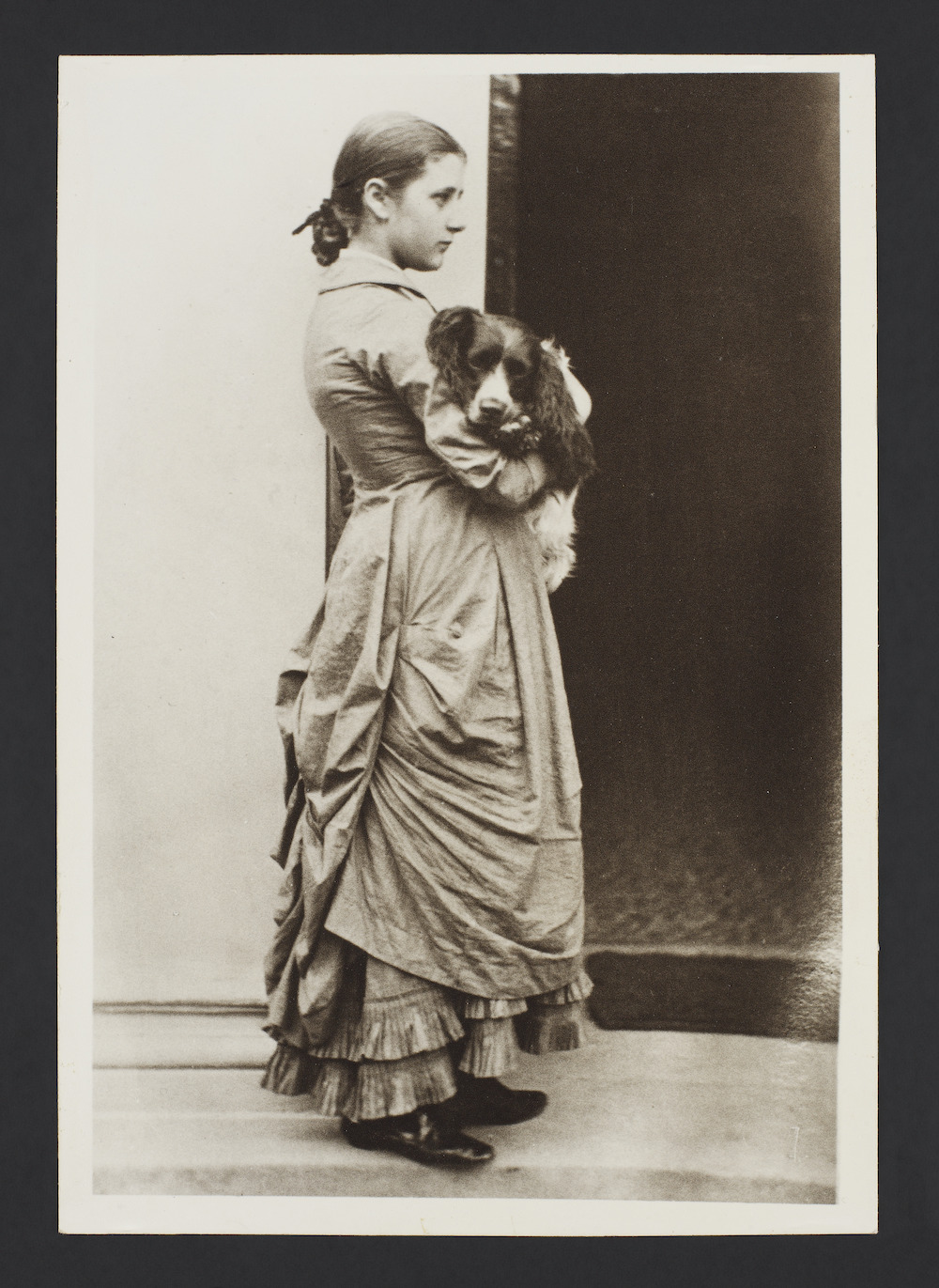
We now associate Beatrix Potter with the Lake District, and yet – as this new exhibition highlights – London and specifically South Kensington had a lasting impact on her work. Pulling together over 200 objects and artefacts held by the V&A and the National Trust, Beatrix Potter: Drawn to Nature begins with her early years as part of an upper-middle class London family. Letters, diaries, family photographs and a beautiful marriage quilt belonging to her parents reveal a creative and loving household. Within this environment interests were encouraged, and for Beatrix this meant observation of the natural world and a passionate love for animals.

In the schoolroom at home, Beatrix and her brother Bertram were allowed to keep a menagerie of pets including rabbits, mice, frogs, bats and lizards. They also collected butterflies, beetles, bird eggs, shells and fossils and accompanied their scientific observations with sketches. The illustrator’s eye was already being well honed, and a trip to meet the artist, Sir John Everett Millais who worked nearby in Cromwell Gardens prompted him to comment of Beatrix, ‘plenty of people can draw, but you can observe.’
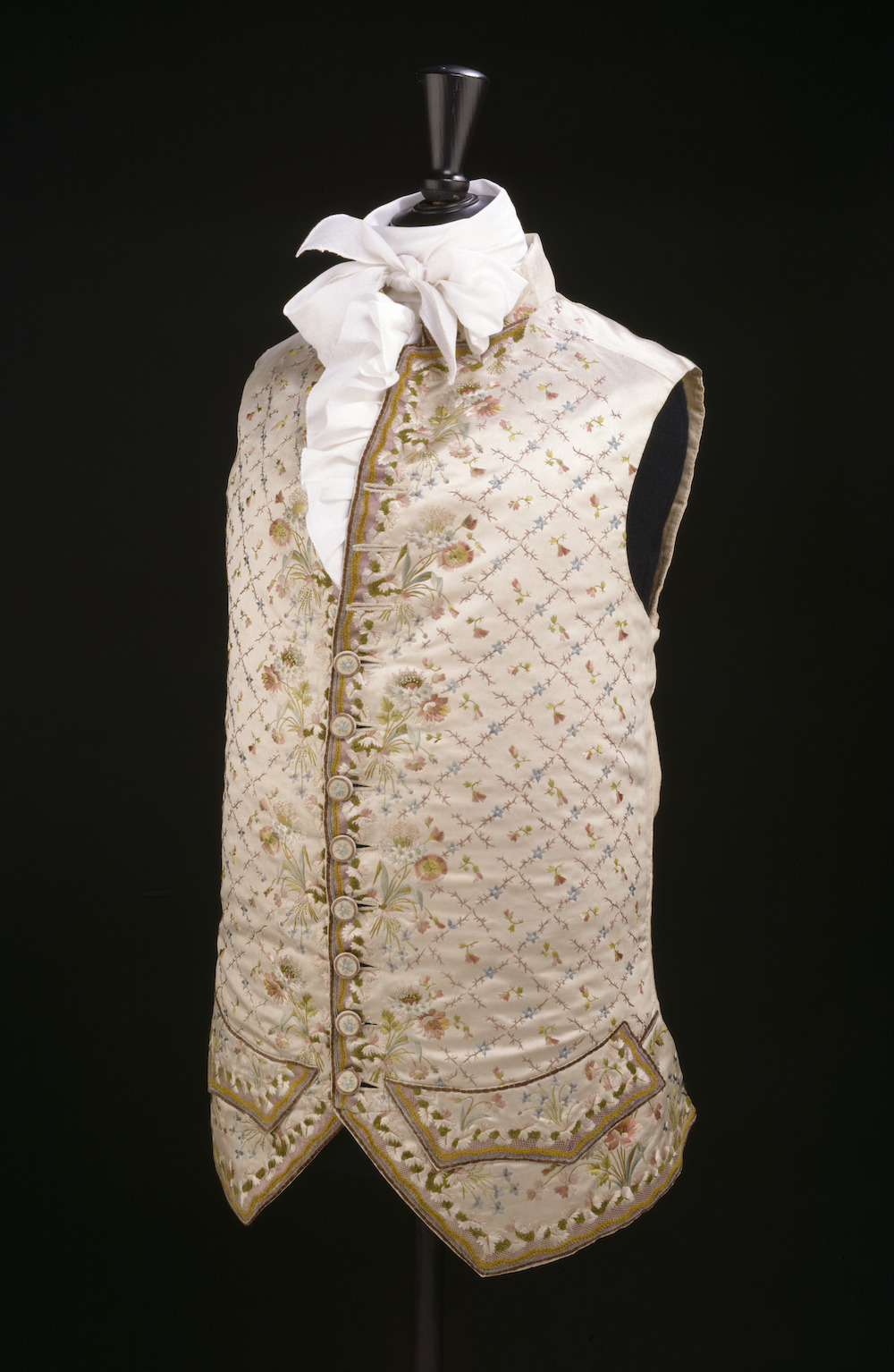
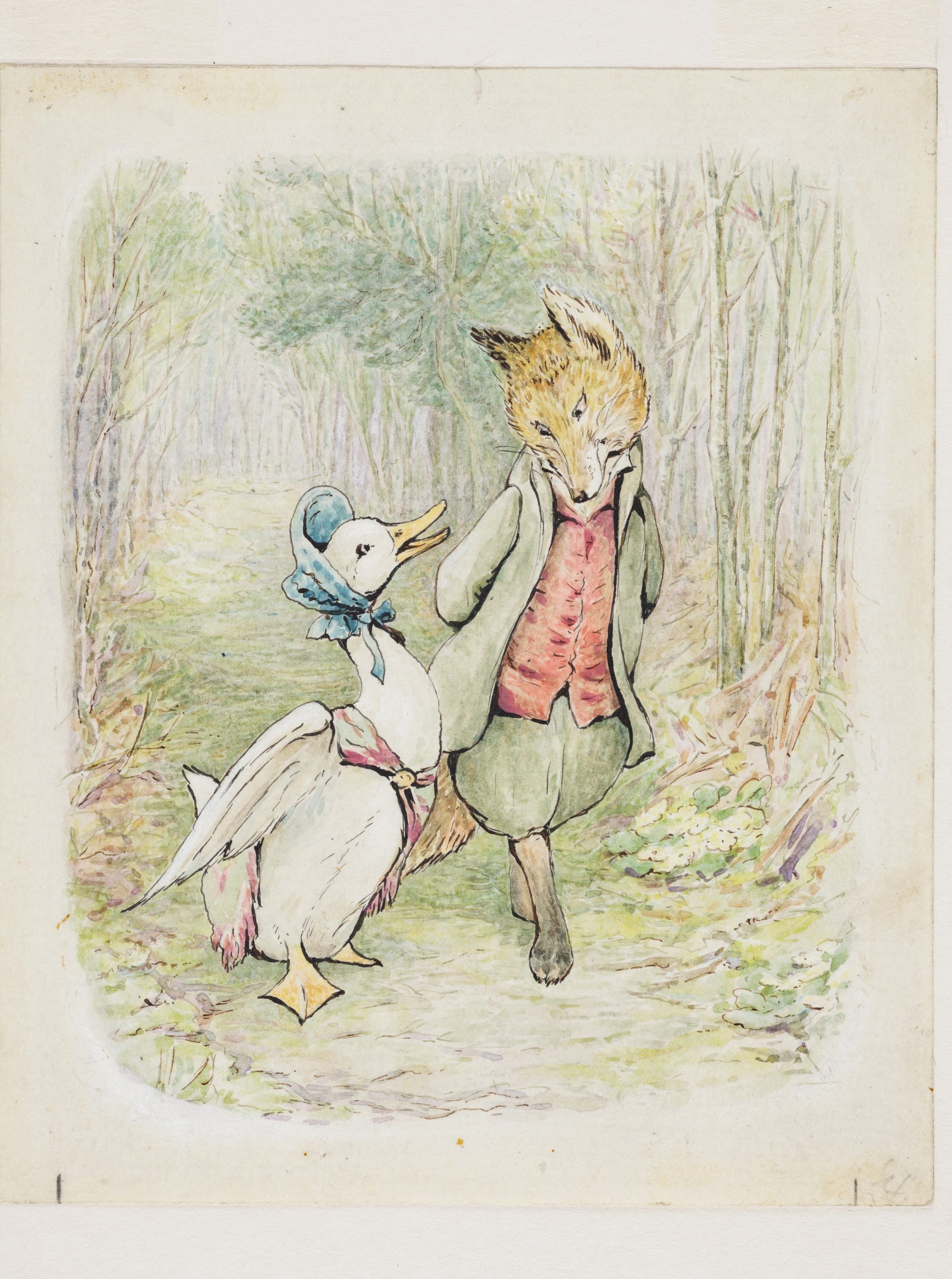
But it was not only animals and wildlife that she studied. Also on display is a beautiful waistcoat spun with golden threads, thought to have been sketched by Beatrix at the South Kensington Museum (now the V&A). Only she would see it as being sewn by mice; and it made its way into story of The Tailor of Gloucester, with an artwork from the book shown alongside it. Bestowing animals with human powers, and characterising them through their clothes was the key to their charm – think of sweet Jemima Puddleduck in her blue bonnet and the Flopsy bunnies in their matching pink capes.
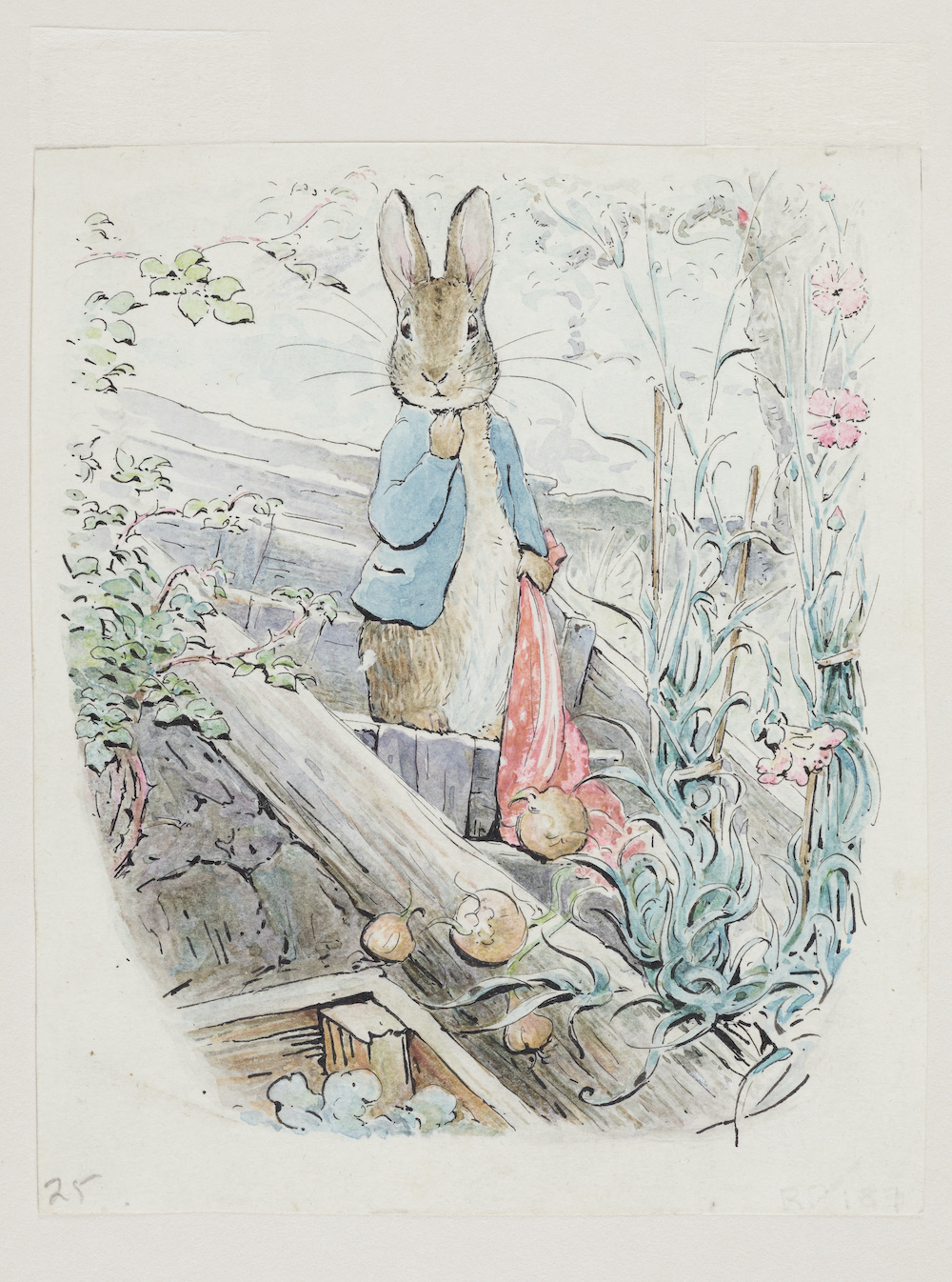
The stories themselves only came into being sort of by accident. Beatrix’s homemade family Christmas cards were so popular that her brother Bertram suggested sending them off to a greetings card company, who promptly placed an order. From there, she worked up the story of Bad Peter (on display in the exhibition) and this became The Tale of Peter Rabbit, published in 1902 by Frederick Warne. It was an immediate success, and from there she began to release two storybooks a year.
All 23 Tales are on a shelf for children to look at, along with plenty more interactive sections – fancy dress costumes to try on, little mice to spot along the way. And yet somehow overall the exhibition feels more suited to adults than it does to children. It tells a personal story and ends with sweeping footage of the Lake District, filmed especially for the exhibition, where Potter moved when she was married aged 47. It was to be her true home, and yet she arrived with all the London influences within her.


A Little Bird Loves