If you follow The Fabled Thread on instagram then you will know all about the wonderful home of its founder, Eppie Thompson. Her Hackney flat is a colourful haven where every surface is adorned with texture and pattern, and of course her embroidery in frames. She’s also decorated her fireplace – with nods to Charleston, painted the Jabberwocky around her doorframe and created a Moby Dick-themed side cabinet. As she launches a new range of eggshell paints especially for decorating furniture, we asked Eppie to share a few of her top tips about taking on a similar project at home.
1. Find your inspiration for the piece
There are two main reasons why I have started a decorative painting project, either I have an idea for a decorative piece of furniture I want to create or I have a piece of furniture or element of my home which I think needs lifting.
In the former scenario, it can be a breeze coming up with a design idea. For example, after many hours spent on Pintrest looking at old Nantucket Whaling posters, I got it in my head I was going to create a cabinet entirely themed around Moby Dick. The story gave me all the inspiration and characters I needed to take pen to paper and start designing.

If you are starting from the second scenario, the blank page can look quite intimidating. Spend some time looking at images until you find something which gets you excited, and then dig into that image. You don’t have to just look at painted furniture for your inspiration, try textiles, wall papers, ceramics and nature. By looking at these images, rather than just focussing on other examples of decorative painters, you will end up with something more unique to you.
If you are after inspiration, I really recommend all the books by John Gillow which are brimming with incredible images.

2. Pick your colour palette
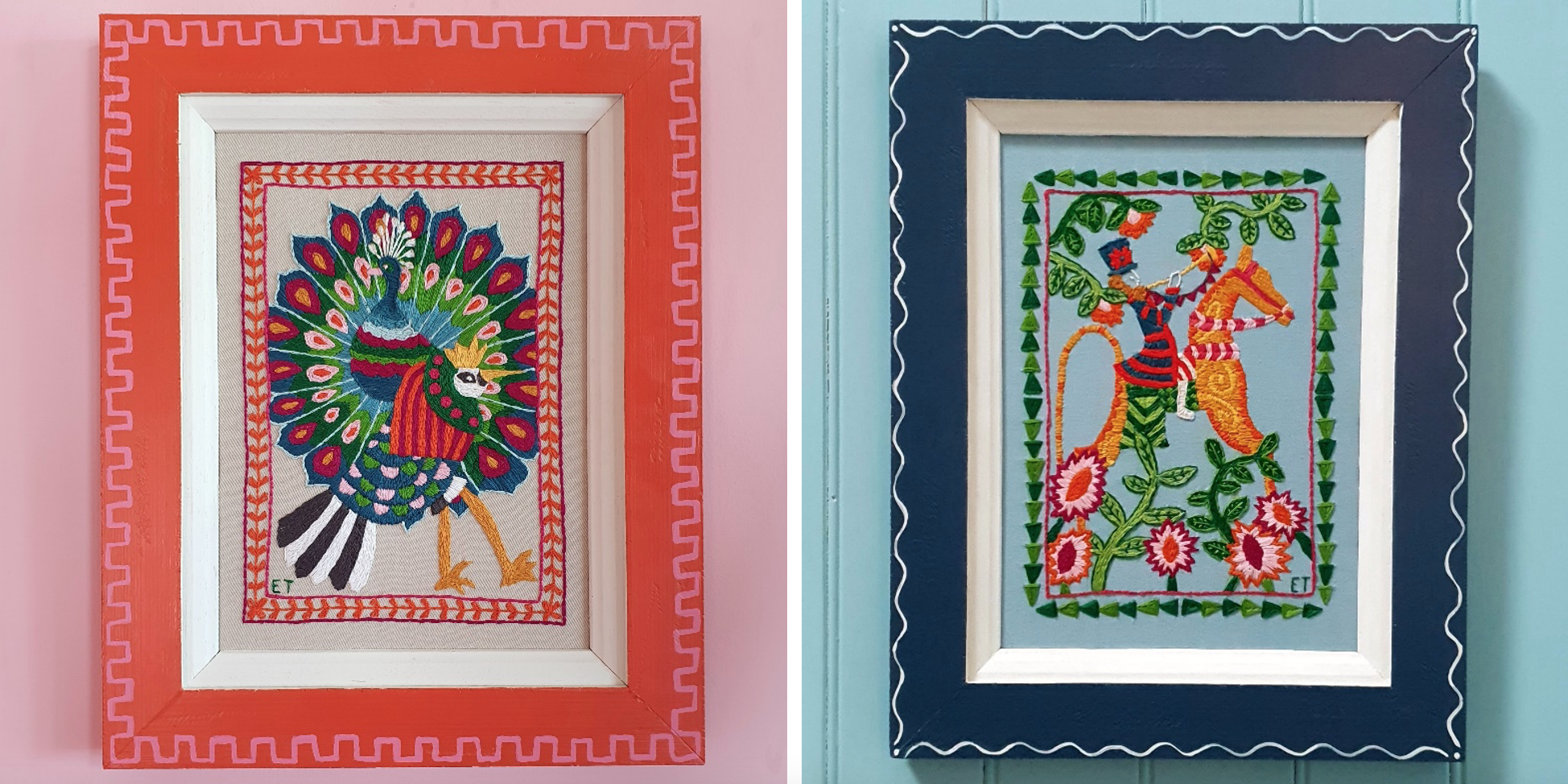
When choosing the colours for your piece, you need to ask yourself, what’s the point of the decoration? If you are painting a picture frame, the purpose is to enhance what’s inside the frame. The temptation can be to go full-on but then the eye is drawn to the frame rather than the contents. Try keeping the decoration simple and picking out colours from within the artwork so that everything feels harmonious.
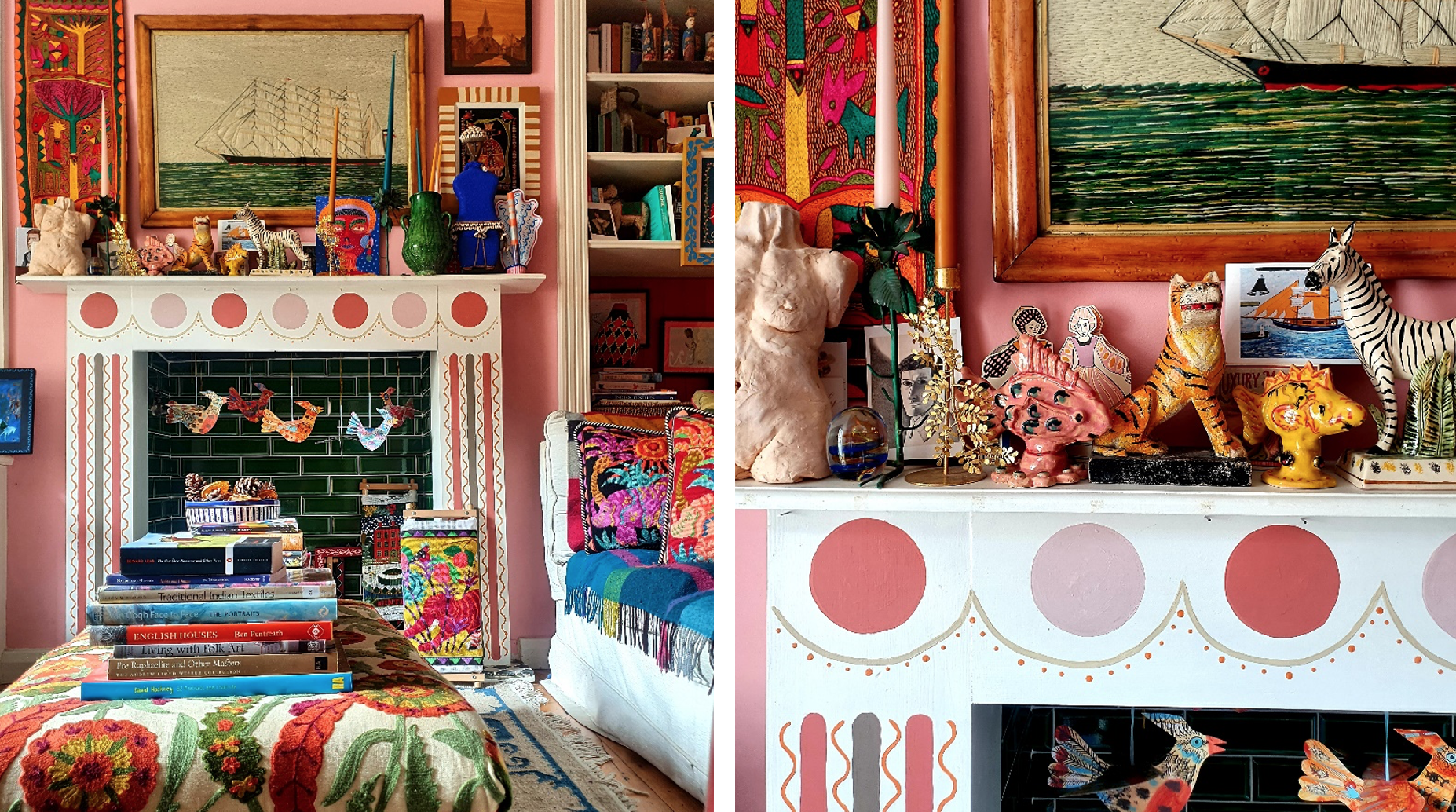
If you are painting a piece of furniture or element in your room, you need to decide if you want it to stand out or settle into your overall scheme. When I decorated my fireplace at home, I didn’t want it to dominate the small space therefore I picked out tones which were just subtle variations on the colour of the room using pinks, oranges and browns.
3. Plan your design
When planning out your design, consider how far away from the object people will stand and how they will look at the object. Adding too much detail can make a design start to feel fussy. That is perfectly fine if you are expecting it to be relatively stand alone in the room and you want to draw the viewer in. But if you have a lot of other things going on in your space, then a bolder, simpler design may be preferrable. Have confidence to keep it simple!
One way to experiment with a design before you begin is by printing out several images of the item you are painting in situ, and then drawing or painting your ideas over the top. It is a wonderful way of testing out ideas without the full commitment. You can also then get second opinions on the design.

4. Applying your base colour
Before starting your decorative work, you will probably want to apply a base colour to the whole area. Use several thin layers of paint, working it into all the cracks, marks and grains of the piece. If you apply the paint too thickly, drips will inevitably form which can be hard to get rid of. So have patience in this stage.
If you are painting on top of a matt emulsion, then make sure you have some spare paint of the base coat colour. As you add your decorative paint, you are bound to make the odd mistake. You’ll want to have some spare paint to touch up your work. This isn’t as important if you are painting on top of an easily wipeable surface (i.e. varnish or eggshell paint) which can quite cleanly be corrected when the paint is still wet.

5. Draw up the design
Every time I have attempted to free hand a design, it hasn’t gone well. Years of painting experience would enable you to remove this step, but if like me, you’re just doing the occasional project, then do draw the design out. It will be worth the extra time it takes.
It may sound like common sense, but make sure you draw the design very lightly. It is remarkable the number of times I have been too heavy-handed with the pencil I have used, only to start seeing the pencil marks coming through the finished piece. If you are painting on a mid-to-dark tone, I recommend using a chalk pencil.
6. What materials to use
I love using eggshell paints for decorative work. They have a hard-wearing finish and a subtle sheen to them. Using eggshell means you don’t need to varnish or wax the paint once you finish. No matter how hard I try, during the waxing process I always get some dust or fibres stuck and spend hours with tweezers trying to get them out before it dries. Eggshell has a very similar finish to waxed emulsion paint, but avoids this stage in the process.
Good luck!

Paints by The Fabled Thread launch on Friday 22nd October. The 50 ml pots of boldly coloured paints are designed especially for decorative painting. There will be a limited palette of 18 colours and you can purchase them all, as well as a selection of paint brushes and raw wooden picture frames on thefabledthread.com.


A Little Bird Loves