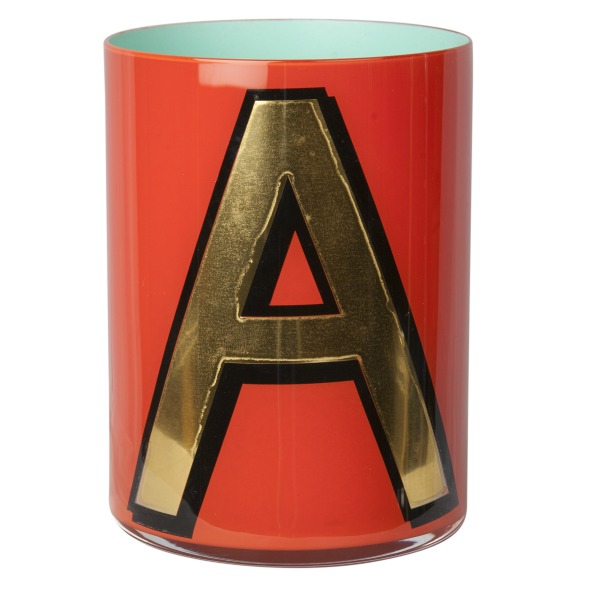
Alphabet Brush Pots at Pentreath & Hall

We can’t think of anything we don’t covet at the gloriously chic Bloomsbury store Pentreath & Hall. And their latest additions are exciting for many reasons. The new Alphabet pots are – as the name suggests – monogrammed repositories for desktop paraphernalia. But these aren’t any ordinary brush holders – each crystal tumbler has a gold letter backed with colourful lacquer and a topcoat of varnish. And they are all handmade in London.

Dior & I

If you weren’t the lucky winner of tickets to a preview of Dior & I in our prize draw a few weeks back, then you can now see the movie on general release. And what a treat it is. The film follows Belgian designer, Raf Simons as he arrives at Christian Dior in the spring of 2012 and produces his first haute couture collection in just eight weeks (as opposed to the usual six months). With a background in menswear and later, as head of a minimalist house (Jil Sander) Simons wasn’t ever an obvious choice for Dior, but through his beautifully constructed narrative, director Frédéric Tcheng illustrates how Simons deftly jolted the storied house into the 21st century. Tcheng has form for highly watchable fashion films – he produced the wonderful Valentino film The Last Emperor and co-directed the brilliant Vreeland memoir, The Eye Has To Travel. Dior and I is spliced with archive footage and narrative from the house founder, who shot to fame with his New Look in 1947, and who, like Simons, struggled with the very public role that his success brought. We follow Simons as he constructs his mood-boards with his team, plunges into the incredible archive and visits Christian Dior’s childhood home – a pale pink and grey mansion on the Normandy coast. But the heart and soul of the film is in the couture ateliers where Simons’ vision is brought to life by the incredible talent of the seamstresses. Elegant, witty and utterly inspiring, this is an emotional journey not to be missed.

London Art Studies

If you think the London Art world can be rather elitist and unfriendly, then you’ll find London Art Studies a breath of fresh air.  Set up by Kate Gordon (ex-Sothebys and CNN), London Art Studies offers a series of lectures and talks on art, photography and jewellery, often linked to a current exhibition or show.  We went to one earlier this year and absolutely loved it.  The talk (on Rubens, Grayson Perry and Marlene Dumas) was fun and informative and everybody else there was very friendly and welcoming – for most it was amongst the second or third that they had been to.  The event we attended was a morning talk with coffee which was a perfect antidote to the rest of our busy day but there are other longer ones too such as the lunches with a talk, held at Koffmann’s at The Berkeley or the evening talks at The Bulgari Hotel.  We can’t recommend more highly seeing a show through the eyes of a knowledgable curator or expert, you really do get more out of a show but, if you’d prefer to brush up on your general art history, there are also other forthcoming lectures on Contemporary Photography or the Venice Biennale.  Other lectures coming up also include Sarah Lucas, Sargent and Alexander McQueen and a Spotlight on Bulgari Jewellery.  Gift cards are available to buy and we can’t think of a more lovely present to receive!

The Violet Bakery Cookbook

It takes a really special baking book to make it on to our kitchen shelves these days and that’s exactly what The Violet Bakery Cookbook by Claire Ptak is. Ptak, formerly the pastry chef at Alice Water’s legendary Chez Panisse restaurant, now runs the Violet Bakery in Hackney.  She has a refreshingly simple approach to the guilt that comes with eating sugar-laden cakes, emphasising that “if you are going to treat yourself, it better taste good, right?” We’ve only baked one recipe from this book so far: Egg yolk chocolate chip cookies but they were unlike any cookies we’ve made before. Ptak is obsessed with making ingredients taste like themselves, or the best version of themselves and her recipes use buckwheat, spelt and agave as well as the usual butter, eggs and caster sugar. Each recipe has been carefully considered and she brings a Californian freshness to staid teatime favourites such as Victoria sponge and lemon drizzle loaf. This is a thoughtful, as well as joyous, cookbook.

Here’s a video of her making cinnamon buns to whet your appetite.

Diana Henry’s A Bird in the Hand

We love Diana Henry’s writing. Last spring we devoured (quite literally) her book on eating healthily without skimping on flavour. Many of those ideas have now become part of our own repertoire. One year on and the Sunday Telegraph columnist has turned her attention to chicken with A Bird In The Hand. Like Henry we cook chicken at least once a week – and numerous other meals always follow – a chicken noodle soup from the stock, a risotto, a quick lunch of the ripped flesh stuffed into some really good fresh bread etc etc. But even if you are devoted to chicken you can still fall into the trap of doing the same old things. So this book is fabulously useful. There’s a chapter of please-anyone supper recipes with spins on classics (saltimbocca, chicken with tarragon, schnitzel, chicken forestiere) as well as more novel ideas too. There are also chapters with more exotic spiced up chicken recipes which draw ideas from Africa and the Caribbean to India and the Far East and one with more sumptuous ideas for dinners or weekend roasts such as a perky paprika roast chicken with buttery caraway potatoes or a colourful roast chicken with pumpkin, black lentils and hazelnut picada as well as even more luxurious ways for a bird to raise its game – roasted with shavings of fresh black truffle for instance. Henry includes some essays with advice on methods – which, even if you cook a lot, are still illuminating. There are almost certainly going to be things we return to again and again – we can’t wait to try the chicken, leek and cider pie with a cheddar and hazlenut crumble or her retro chicken breasts with wild mushroom sauce and puy lentils and by chance we have the recipe just below.


chicken breasts with wild mushroom sauce and puy lentils

For years this was my ‘posh dinner party’ number. People used to want a sauce and a bit of cream. Times have changed, but this is still a lovely dish. You can make the sauce and lentils ahead of time and reheat them, which makes it convenient, too.

serves 6

for the sauce

25g (scant 1oz) dried wild mushrooms
15g (.oz) unsalted butter
100g (3 1/2 oz) mushrooms, roughly chopped
350ml (12fl oz) well-flavoured chicken stock
125ml (4fl oz) double cream
salt and pepper

for the chicken

6 skin-on boneless chicken breasts (the best you can afford), each 150g (5 ½ oz)
20g (3/4 oz) unsalted butter
a splash of groundnut or rapeseed oil

for the lentils

2 tbsp olive oil
1 small onion, finely chopped
1 carrot, finely chopped
1 celery stick, finely chopped
300g (10 ½ oz) Puy or Umbrian lentils
450ml (16fl oz) chicken stock, more if needed (optional)
1 bay leaf
2 tsp sherry vinegar
2 tbsp extra virgin olive oil
1 ½ tbsp finely chopped flat-leaf parsley leaves


Start with the sauce, which you can make in advance if you want and reheat at the last minute.

Pour 75ml (2.fl oz) of boiling water over the dried mushrooms and leave to soak for 15 minutes.

Melt the butter and saute the other mushrooms until well coloured. Drain the wild mushrooms, reserving the soaking liquor, and chop any that are large. Add to the mushrooms in the pan and cook for another minute. Pour on the stock and soaking liquor and cook until the liquid has reduced by two-thirds. Add the cream and simmer until the sauce coats the back of a spoon. Taste and season, you shouldn’t need any salt because of the reduced chicken stock.

Allow the chicken breasts to come to room temperature. For the lentils, heat the regular oil in a heavy-based pan and gently saute the onion, carrot and celery for 10 minutes. Add the lentils, stock and bay leaf and bring to the boil, then reduce the heat to a simmer and cook, covered, for 20–25 minutes, or until the lentils are cooked but still have a little bite. (Keep an eye on them as they turn mushy very quickly.) By the end of the cooking time the stock should have been absorbed (you may need a little more stock or water during cooking).

Gently stir in the vinegar, virgin oil and parsley, check for seasoning and cover to keep warm.

Heat the butter and oil for the chicken in a large frying pan. Season the chicken and put it in the pan, skin side down. Cook for two minutes on each side over a medium heat, then reduce the heat and cook for six or so minutes, turning, until cooked through but still moist.

Quickly reheat the sauce. Either leave the breasts whole or cut them, on a slight angle, into two or three pieces. Put some lentils into the centre of six warmed plates, put a chicken breast on top of each serving and spoon some of the sauce around. Serve immediately.

From A Bird in The Hand by Diana Henry, published by Mitchell Beazley, £20 (www.octopusbooks.co.uk)


Award Winning Cookbook – Master It by Rory O’Connell

Rory O’Connell’s Master It, which was published in hardback two years ago, has quickly become one of our favourite cookbooks. It’s an essential book if you want to learn to cook, rather than just follow recipes, as O’Connell – a teacher by trade (as well as working as a chef at some of the world’s best restaurants including Chez Parnisse, O’Connell co-founded Ballymaloe Cookery School with his sister, Darina Allen, and still teaches there) – is a brilliant explainer of technique and method, as well as being inspiring on ingredients and why we should spend time cooking at all. The recipes in the book are also wonderful (and for things  you actually want to eat) and wonderfully precise, not least for having been honed by years of teaching experience, and O’Connell writes extremely well. For us, the book ticks every box and then some. Not surprisingly, Master It, was named Cookbook of the Year by several critics and publications (including the Observer Food Monthly), and it won the André Simon Award – the industry’s most prestigious food writing prize. You can read more about why we rate the book and O’Connell so highly here, when we raved about it in hardback, but we couldn’t resist giving the book another shout-out to celebrate its paperback publication.

Our favourite modern ceramic tilers

If, when you think of tiling, you think of Fired Earth or Moroccan floor tiles, then you need to read on.  For we’ve discovered some fabulous modern ceramic tilers who’ve given us inspiration to think outside of the box.

First up is Laura Carlin, an illustrator who studied at the Royal College of Art and has drawn for VogueThe Guardian and The Independent.  She recently added her designs to ceramic tiles and we’re particular fans of her animal and cheetah tiles, £100 from The New Craftsmen.

 Tiles1


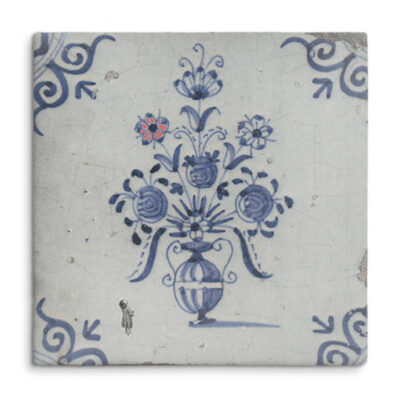
Next is StoryTiles founded by Marga van Oers, who designs miniature stories on Dutch white tiles.  Made in Holland,  van Oers gives these traditional ceramics a new life with her modern interpretations such as The Rose Picker below (from her Old Dutch StoryTiles, she also has a line of Modern StoryTiles).  You can additionally order your own custom-made StoryTile starting from 150 Euros.

Tiles2

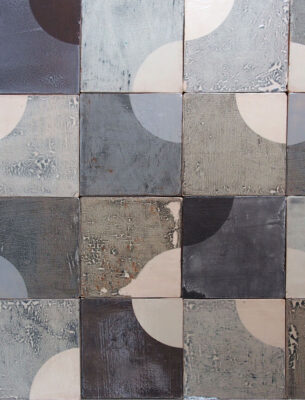
Finally, there is Sminkthings set up by Marianne Smink, also from the Netherlands who moved to London and studied at Central St Martins.  She makes beautiful ceramic tiles as well as concrete floor tiles and wallpaper with a modern, very artistic feel to them.

Tiles4

Guest Blog: Valentine Warner on fish

I was lucky enough to spend some time travelling through Norway, Sweden and Denmark and I love the way that in those countries, hunting, fishing and foraging is a way of life, contradictory to the expensive restaurant fluffery that we sometimes get in Britain.  I am especially passionate about fishing, it’s one of the few times that I get to switch my brain off and I always have a rod in the back of my car, just in case.  I love fishing the chalk streams of Southern England as well as the chunky seas that surround the UK.  Whenever I’m on holiday by the sea, I always head to the harbour where you’ll find the fisherman slamming big boxes down and 99.9% of the time, they’ll sell some of their fish to you.  Fish is best from these places, vibrant and glistening, not sunken-eyed on a slab.  Which is why, in London, I only really go to Kensington Place Fish Shop.  They carry a small variety of fish but it’s excellent.

Ethics is very important when it comes to buying fish and although there’s a lot of information around, it isn’t always necessarily correct. It can also be quite hard to find out where things come from.  Yes, there is a lot of over-fishing but it isn’t necessarily true of all fisheries. Yes, we know that overall numbers of certain fish are worryingly low, but it also needs to be said that certain fisheries which are run properly will have healthy stocks. Overfishing is definitely a huge problem not only changing the natural environment of a given locality but it is also highly detrimental for uninformed communities who maybe catching these fish themselves, or watching while others remove it to foreign markets.

I like to champion lesser known fishes such as scad (horse mackerel).  Take weaver fish, for example, we only think of it as a little brute, here to violate your foot with its poisonous spine. They are infact delicious but we send them abroad to France. We have huge spider crab fisheries but we don’t eat any of it.  We sell it to the Spanish and Portuguese who love it and quite rightly so as certainly the white flesh is superior to the meat of the brown crab.  If it’s ugly or fiddly, very often the British can’t be bothered with it.  The one fish that I don’t eat is eel.  There’s no such thing as totally farmed eel as they all start off in the wild, so I leave them alone as they need all the help they can get.

To get top-notch fish in London when you eat out, J Sheekey’s is always great when you can afford it.  Mark Hix too, always has fantastic fish.  Mackerel is my favourite fish in the world but it needs to be fresh, quivering in your hand.  Lemon sole too is a favourite when slid from a buttery pan and shellfish, I’d be weeping on a rock without them.  A huge bowl of River Severn cockles or spider crabs to pick over or razor clams always makes me happy. Open the wine and beat the mayonnaise. Go Fish!


MAGIC SOUP

You think you know about soup until you read Magic Soup – a collection of soup based recipes by Nicole Pisani and Kate Adams that was originally devised as an ebook by Adams as part of her blog The Flat Tummy Club. Pisani is a chef who has worked at Nopi and The Modern Pantry and so knows more than a thing or too about deeply aromatic and soulful flavours, and that’s more than evident in this gorgeously illustrated new book. There are stacks of very healthy soups here – virtuous restorative broths; clean, cleansing recipes such as the beautiful looking Celery Soup with Beetroot Cured Salmon and light vegetable based soups that are perfect for a GOOP-style cleanse. But the revelation in this book is how you can make soup really transporting – and a meal in itself. A tart Beetroot and Burrata soup or a rich Sumac Roasted Sweet Potato are so simple to make – but totally moreish. There are ‘feast’ soups too such as a Bay Leaf Broth with Venison Meatballs or a fab-sounding Clam & Ravioli soup that we will definitely be trying once the weather warms up. This is the kind of book you could eat from for weeks at a stretch – especially at this time of year when there is nothing quite as comforting as a bowl of steaming soup and a hunk of the most delicious bread.

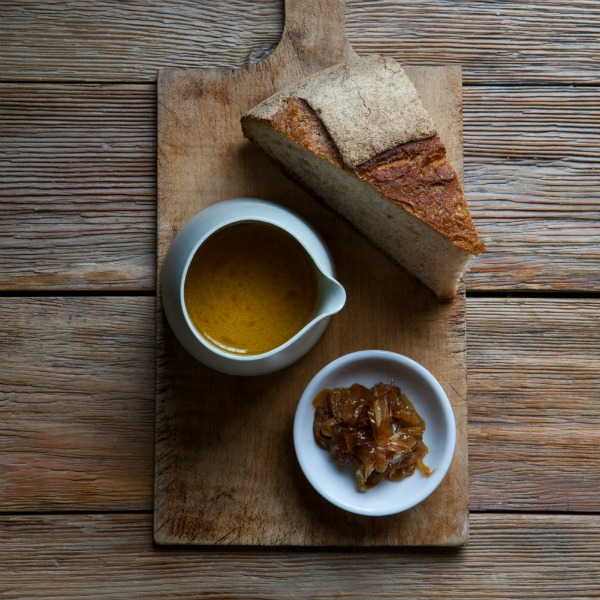
Below is one recipe from the book – a delicious, deconstructed French Onion soup.


FRENCH ONION SOUP

SERVES 4

80g unsalted butter
800g small white onions, thinly sliced
2 tsp brown sugar
1 tbsp spelt or plain flour
100ml sake
1 litre beef stock
3 large sprigs fresh thyme
2 bay leaves
flaky sea salt and freshly ground black pepper
wedges of sourdough bread, to serve


Traditionally, French onion soup is served with melted Gruyère croutons. For a change, we sieve the soup and serve it as a broth with a wedge of fresh sourdough bread and butter. We’ve also gone for a little sake to cut through the sweet onions.

Melt the butter in a large, heavy-based saucepan over a low heat and add the onions. Soften very slowly for about 1 1/2 hours, stirring occasionally, until golden in colour and beginning to caramelise.

Add half the sugar to help the onions caramelise further for another 10 minutes or so. You can increase the heat a little at this stage.

Stir in the flour and half the sake, scraping any bits off the bottom of the pan. Stir in the rest of the sake and the beef stock. Tie the thyme and bay leaves together with string and add them to the pan. Bring to the boil, then reduce the heat to a simmer and cook for about 1 hour. Taste and season with salt and pepper.

Strain the onion broth and set aside the onions. Heat a small frying pan, add the onions and the remaining sugar and cook for 10–15 minutes until they form a chutney-like consistency. Warm the onion broth and serve with sourdough bread and the onions on the side.

The Sleep Shirt

The best things in life are often the simplest and so it is with The Sleep Shirt. The company’s gorgeous crisp cotton nightshirts began life when Canadian Alexandra Suhner Isenberg bought herself a Nineteenth century cotton shirt at Spitalfields market. Inspired by its simple design she produced two modern versions – a short and long nightshirt in striped cotton. Now the company produces the elegant bib-front shirts in Japanese cotton as well as sweet nighties with drawstring necks, cotton loungepants and shorts and other cotton separates as well as adorable gift sets with matching eye masks. The only problem is choosing which ones to buy – for now we are treating ourselves to an oversized linen night-shirt although we suspect we will be back for more very soon. Although based in Canada the shirts are sold in the UK at the gorgeous Marylebone boutique, Mouki and online at Net-a-Porter.


Purely Perfect Cleansing Creme for Hair

We were pretty sceptical about the trend for washing one’s hair using just a conditioner, or co-washing, as it’s called. Haunted by memories of Wash & Go, we never imagined we would join the ranks of those taking just one bottle of hair product into the shower. The product that kick-started the trend, Purely Perfect Cleansing Creme, has changed all of that, though. It has also basically changed our hair, for the better.

It’s an aloe vera-rich conditioner that you apply to your hair at the beginning of your shower and rinse out at the end. It doesn’t foam because it doesn’t contain any detergents but nor does it strip your hair of its natural oils so there’s no need to apply conditioner post-shampoo to smooth down the hair shaft again. It feels like quite a counter-intuitive process, particularly, if like us, you have been using a separate shampoo and conditioner for over twenty years. It really does work, though. After a week of using it we noticed that our hair didn’t veer between its usual condition of being quite frizzy the day we washed it and lank pretty soon thereafter – it looked clean and glossy throughout the week.

Co-washing does take a bit of adjusting to and you’ll need to work out how exactly how much product your hair needs. You also need to make sure you massage it in well and don’t rinse it out for about five minutes. We still need to use a styling product post-shower – a Bumble & Bumble spray in our case – but you may not. Purely Perfect Cleansing Creme isn’t cheap – it’s £35 for 237ml but you need to use very little of it; we’ve barely made a dent in the bottle we’ve been using for the past two months, for example. You also need to bear in mind the amount of money you will save on conditioners, masques and maybe even styling products too. Oh, and you’ll probably be spending less time in the shower from now on and you’re also less likely to trip over bottles of conditioner whilst you’re there. We won’t be looking back.


Bespoke Stationers: Fin Fellowes and Katie Leamon

We came across luxury bespoke stationers Fin Fellowes and Katie Leamon recently and have been busy racking our brains trying to think which upcoming occasion we can commission them for.  Fin Fellowes, a freelance designer and illustrator, draws gorgeous wedding crests and beautiful party invitations (she recently did one for Vogue Editor Alexandra Shulman).  For a wedding, she will do everything from the invitations to the table cards and we particularly love her floral designs.  To contact Fin Fellowes and look at more of her designs, see her website here.

Fin Fellowes

Katie Leamon has a design studio in London and a family run production studio in the country.  Leamon’s love of typography is especially strong and makes for wonderful greeting cards, stationery sets, notebooks and gift wrap, as well as bespoke invitations.  You can buy some of her stock at Selfridges, Anthropologie, Fortnum & Masons and Harrods but you’ll find the widest selection and contact details for her bespoke invitations on her website here.


Katie Leamon


Katie Leamon 2


It’s goodbye for now…

The team at A Little Bird are taking a break to recharge and make some exciting changes behind-the-scenes. We look forward to seeing you again soon.

CONTINUE TO SITE

A Little Bird Told Me…

SIGN UP TO OUR NEWSLETTER TO STAY IN-THE-NOW. ONLY LANDING IN YOUR INBOX ON THURSDAY MORNINGS AT 11AM.