We have long been addicted to Petersham Nurseries, not only because it provides the most idyllic escape from the city, a bucolic jolt that is utterly transformative, but also because it’s impossible to leave the nurseries without being inspired, invigorated and uplifted. So we are extremely excited to announce our first A Little Bird event there this June. The morning will cover how to grow edible flowers from seed, tips on incorporating them into borders and boxes, as well as how to harvest them with horticulturist Thomas Broom. The workshop will then focus on how to use your crop – Lucy Boyd, Petersham’s Head Gardener (who also happens to be one of our favorite food writers) will demonstrate how to use the flowers in summer recipes. There will be a chance to buy seeds and plants used in the workshop at the event too – and of course plenty of time to browse the nurseries and shop afterwards at what has to be one of the prettiest times of year. To reserve your place email info@petershamnurseries.com – and if our past workshops sell-out success is anything to go by, early booking is very much recommended.
I started Cloud Nine a year ago after coming across an American recipe for natural, handmade marshmallows, having had no idea that that was possible. Perhaps it’s because some of my sweetest memories are the sugary ones that I take such pleasure in restoring this long-bastardised confectionery to its origins as a delicacy, and in sharing the discovery of how sumptuous they can be.
In the Seventies, my father, a poet, had cans of Coca-Cola delivered by the case, and would chain-drink them at his desk at home as he wrote. My mother, in those days a tightrope-walker and singer, was always frugal in her tastes, but occasionally splashed out on a Bounty bar. Whenever I visited friends whose parents kept a jar of sweets in the kitchen, I marveled at the very idea.
My birthday picnics took place every June on the top of Parliament Hill in north London. The head designer of the Doctor Who monster costumes was a family friend and braved the heat to don tentacles and chase my hysterical friends and me around the heath. The other highlight was our customary party food: two tubs of ice cream from Marine Ices nearby, cones, and a date and chocolate birthday cake, baked in a film can and topped with my name in yellow marzipan. Other than that, baking and sweets didn’t figure in my everyday childhood.
Our fridge in Islington was a small, basic number, and is still humming away there four decades on. We watched a particularly stark Samuel Beckett play on TV one night. There was little speech and the stage directions seemed to consist mainly of: ‘Goes to door. Opens door. Nothing…. Goes to window. Opens window. Nothing.” It became a running joke at home: ‘Goes to fridge. Opens fridge. Nothing.’
When I was eight, I was given an Instamatic Polaroid camera in a sky blue vinyl case for Christmas, a thing of wonder in its heyday. I ran around my aunt’s house in France, wondering what to snap with my precious ten self-developing exposures. I still have the fading first shot, held down with clear adhesive corners in a scrap book: it was of the inside of my aunt’s gleaming, gigantic and, most importantly, full fridge.
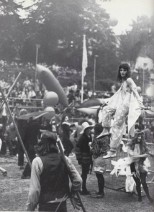
So when my mother decided to incorporate sherbet flying saucers into her performance I was keen to assist. At various festivals, she walked a low rope, stripping off a rainbow of Velcroed costumes down to a nude-painted bikini. I, in my Indian mirror dress, ran around beneath her, gathering up the flying saucers she scattered. I also collected her discarded layers, wishing she would put them back on again, and dreading the final one. It was a psychological battle every time: should I save my mother’s modesty and throw back her clothes, or gorge on as much sherbet as possible, sherbet I knew was intended for the spectators?
The memory that still bears a heavenly glow is of a daytime party held on the roof gardens above the Biba department store in 1975, a swansong to mark its last days. My mother was wearing a shredded silk wedding dress and reading from a book of Rimbaud poems as she walked her rope, parasol in hand. I wandered off like Alice. It was a hot afternoon, and there were surprises down every vine-covered walkway: dancing fountains, a flamboyance (for that is the collective noun) of pink flamingos, a strongman ripping a telephone book in two. And then I saw it: a sweet stall. But this was a special, magic stall, as, miracle of miracles, everything was free. Not only that, but there weren’t many other children there, so I had it to myself. What happened next at this end of the rainbow dreamland, without my parents at my side, has vanished from my mind, but I have a good idea the dentist was involved.
Was it my parents’ culinary asceticism that led to my indulgent ways? In later life, I jumped at any chance to bake a cake and co-erced friends into making our feasts from scratch on camping weekends. In How to Eat, Nigella Lawson writes of being “unhelpfully obsessive about children’s parties: by that I mean I like to cook all the food myself. It gives me pleasure: it feels important.” That became a mantra for me when I had my own children, and I was crestfallen when my eldest requested sausage rolls, hula hoops and Mr Kipling’s Bakewells for her 10th birthday, rather than the lovingly made cheese stars, meringues and strawberry tarts she was used to.
It was probably a blessing, as the past year has seen me catering to what feels like a nation of Cloud Nine converts, and daily home-made meals are now a distant memory. The path that led to Cloud Nine is historical too. I am not the first in my family to turn a sweet tooth to a profit. In the 19th century, when Napoleon placed an embargo on British goods entering the continent, the lack of West Indian sugar cane paved the way for a thriving French sugar beet industry, making my forebears their fortune. Later on, my great-great grandmother Henriette-Felicite Deneufbourg owned a distillery and would distill alcohol from the beet in the Picardie village where my mother now lives. Like her, I have combined booze and sugar to make alcoholic marshmallows, Champagne and Strawberries, for instance, or Crème de Violette, made with a delicate French Violet liqueur.
The closest I have come to the utter freedom and astonishment I felt on the Roof Gardens that day is at Port Eliot Festival, now in its tenth year, and, luckily, on my doorstep in Cornwall. Inspired by Roald Dahl’s classic story, I am launching a draw this week for a Golden Ticket, to be found in any packet or jar of Cloud Nine marshmallows ordered online. Whoever finds the Golden Ticket will gain free admission for themselves and a friend to this July’s Port Eliot Festival, where we will be running a Cloud Nine stall. And guess what, we’re giving out free samples.
The Tightrope Walker by Hermine Demoriane
Murphy with her mother performing at a festival in 1972
Hermine starring in Derek Jarman’s Jubilee
Scrumptious double raspberry marshmallows from Cloud Nine
One of our favourite things about visiting Paris – or any other city come to think of it – is discovering a chic little store where we can splurge on something exquisite that we would never dream of buying at home. And so it is with Antoinette Poisson – an atelier (named after the 18th century courtesan Madame de Pompadour) where hand-printed wall-paper is sold by the sheet or to order. Since being tipped off about this Place de la Bastille store we have become totally obsessed with the chic graphic designs, intricate floral repeats and rich colours. The three founders who worked in restoration decided to revive the art of hand-made papers made during the 18th Century and while there are plenty of very traditional designs there are also lots of abstract graphics that look extremely modern too. The shop also has hand-blocked linens.
Finding out I was pregnant was a shock. I wanted children, absolutely. And I knew I didn’t want to wait much longer to have them, but when a pregnancy test came back positive just six weeks after saying yes to a marriage proposal, I won’t deny that I was less than prepared. Emotionally, I was there. And I definitely had the very best man in my life to be embarking on such a journey with. But I was at the peak of a successful and extremely enjoyable career as a travel journalist and that area of my life was far from ready for the inclusion of a baby. Surely he or she would scream from take off to landing, make jetlag all the worse and deny me entry to any half way decent hotels that hinted at pampering and fine dining? Well, fast-forward three years and I am delighted to say that I’ve found that to be untrue. Admittedly, not every flight has been a dream, and a trip back from Thailand in 2012 when Lola was only 16 months old took weeks to recover from, but every journey has been so worthwhile. Having her at my side has only made every trip more magical, more memorable and much, much more fun. It was just all about knowing where to go…….
Wilmington, North Carolina
I am truly biased when it comes to this twinkling city on the sea. I went to university in Wilmington and it is home to some of my very dearest memories, not to mention friends. Think Dawson’s Creek, dancing sea oats and miles of coastline fringed with clapboard houses and sugar-soft sand dunes. The people are loaded with genuine Southern charm, the food is fabulous and the sunsets seem to last for hours. There are some lovely hotels, especially on Wrightsville Beach (a beautific barrier island that juts off the edge of Wilmington), but I recommend renting a beach house if you can. If you prefer the mountains, the ethereal and very inviting peaks of the Blueridge Mountains are just a drive away and just as gorgeous by summer as they are in autumn when the leaves change. This may not leap out as an obvious American vacation destination, but that only adds to its appeal as far as I’m concerned. The beach draws me back time and again and Lola loves it, too. There’s something about the place that still has me on my knees in minutes, just begging for some Bluegrass and a beer.
Langkawi, Malaysia
I was lucky enough to spend a month in Malaysia when I was pregnant and I can’t wait to return as a family. The whole country is awash with tiny islands, sensational food (I could eat Laksa every day for life) and amazingly family-friendly places to stay. The Malays adore children so you’ll be hard pushed to find a hotel, restaurant, and even a beach bar that doesn’t welcome little ones of all ages with open arms. The Four Seasons and The Andaman Hotel (both on the idyllic island of Langkawi, which is just a short flight from Kuala Lumpur) were particularly memorable for this reason. And if you choose childcare options, it’s likely the lady who shows up to take care of your little one will have her own children with her, too.
The Balearic Islands, Spain
Again, I’m biased as I lived in Mallorca for some time and still return as often as I can. But there is something about these islands that bob gently off the southeastern coast of Spain that makes life so incredibly easy. Many possess memories of summers spent, albeit less than sober, in the clubs of Ibiza. But Ibiza is as great for families as it is for young hedonists. Most hotels have children’s clubs, great spas and tantalizing restaurants for parents. And being Spain, you can bring children of any age into any establishment at any time of the day or night, without fear of lingering stares and grumpy guffaws. The same goes for Mallorca and Menorca. Mallorca has some amazing family hotels, most notably the Jumeirah Port Soller Hotel and Spa. Defined by fully-supervised swimming pools, babysitters on tap, views across the fishing village of Soller and out onto the Med, and wonderfully luxurious rooms in which to end the day, you can’t beat this as a hotel option just a short drive from Palma airport. Menorca is smaller, flatter and far gentler in pace but, again, a fantastic island for renting a villa, some local bikes and relaxing as a family.
Southwest England
From Hampshire into Dorset, across Somerset and on into Devon and Cornwall, there are fabulous glamping, camping, hiking, walking, kiting, sailing, swimming and riding options. Whether you want a luxury yurt for the whole family or an insulated treehouse, a five-star estate with facilities for all ages or a picturesque cottage to rent, there is no shortage of sensational options really close to home. (Of course these all available across the country but the southwest is my personal favourite). The Cornwall Estate and Spa near St. Austell is particularly dear to me. With its close proximity to the Eden Project, you’ll find as much outside the grounds of this gorgeous hotel as within them. You’ll adore the spa, the memorable food (lots of local produce used here) and the relaxing pool. Children will love the kids’ cinema, the organized treasure hunts on the grounds and the tennis.
Big Sur, California
Again, this particularly gorgeous spot on the coast of California isn’t the only great place on America’s western coast, but it stands out. A long and lazy drive up Highway 1 from Los Angeles in early February when Lola was still a baby proved one of our finest holidays yet. Not only did I feel like I was driving through a film set, but the sun shone every day (back home England was being smattered by storms) and this particular section of coastline is dotted with designated, cliff top spots for whale-watching. Tiny taverns intersect the winding road, all gorgeous for a light lunch in the sunshine, and evenings can be spent huddled in wonderfully welcoming B&B’s along the pristine Pacific coast highway. Family-run and extremely friendly, we rocked up with a babe in arms and they met our every need, from warm milk to a cot bed, a bottle of local red wine and even, on one occasion, a spare tire. Lola may not ever remember being there but we will always remember having her with us and, though I had to get fairly creative in terms of nappy-changing spots at times, I wouldn’t change that for the world.
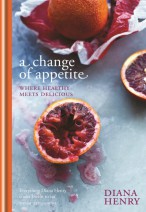
Once in a while a cookbook comes along that has you drooling long before you actually cook anything from it. When we first flicked through an advance copy of Diana Henry’s A Change of Appetite it was a double whammy – not only is this book packed with delicious, inspiring and beautifully shot food, it’s also refreshingly good food. It’s all ‘good’ of course, but Henry has been on a year long odyssey to change the food she cooked to make it healthier without loosing any of the scrumminess. In her words it’s all “accidentally healthy”. It’s all good common-sense – less fat, less sugar, less red meat. More vegetables and whole grains and oily fish. But somehow in her capable hands you never realise the healthy subtext. Here’s one of our favourite recipes – which does of course have sugar – but it’s a lush, delicious cake. The downside is that it’s almost impossible to eat just one slice.
Orange & Pomegranate Cake from A Change of Appetite
Incredibly easy. Not sugar-free I know but, as cakes go, not bad. And it is for dessert. Serve thin slices with Greek yogurt. It’s very, very moist (almost pudding-like) so be careful when you’re moving it off the base of the cake tin and on to a plate.
Serves 8
For the cake
50g (1.oz) wholemeal breadcrumbs
100g (3.oz) ground almonds
175g (6oz) soft light brown sugar
2 tsp baking powder
finely grated zest of 1 orange
215ml (7.fl oz) olive oil, plus more for the tin
4 eggs, lightly beate
seeds from pomegranate
For the syrup
juice of 1 orange
100ml (3.fl oz) pomegranate juice (pure juice, not ‘pomegranate juice drink’)
1 tbsp pomegranate molasses
2 tbsp runny honey
In a bowl, mix together the breadcrumbs, almonds, sugar and baking powder. Add the orange zest, olive oil and eggs and stir well until everything is amalgamated.
Pour the batter into an oiled 20cm (8in) springform cake tin. Put it into a cold oven and set the heat to 190°C/375°F/gas mark 5.
Bake for 45–50 minutes, or until the cake is browned and a skewer inserted into the middle comes out clean.
Meanwhile, make the syrup by gently heating all the ingredients together. Stir a little until the honey has dissolved, then increase the heat and simmer for five minutes. You should end up with about 100ml (3½fl oz) of syrup.
When the cake is cooked, pierce holes all over the surface and slowly pour the syrup all over it, allowing it to sink in.
Leave the cake to cool completely in the tin. It will sink a little in the middle but don’t worry, this makes a lovely dip for the pomegranate seeds to lie in. Scatter the pomegranate seeds on top just before serving.
If I had to answer one of those questionnaires where they ask ‘Where and when were you most happy?’ images of restaurants would flood my mind. Of course you can think back to periods of your life that were exciting or full of contentment – my first year working at the BBC or the days after my children were born – but for the experience of pure, intense happiness lunches or dinners in restaurants are at the top. There was the meal at Raymond Blanc’s first gaff, Le Petit Blanc, in Summertown on the outskirts of Oxford. The fish terrine that melted in the mouth, the beurre blanc that was perfectly seasoned. I can still see that plate. If I concentrate hard enough I can even taste it. Then there’s the place in Italy that Claudia Roden led me to (it came via the serialization of her book on Italian food. She recommended her favourite restaurants in Italy alongside the recipes). It was in Norcia in Umbria. Down a back street, almost impossible to find, through a doorway hung with a curtain of ribbons, it wasn’t remotely smart. Tiled floor, rickety dark wooden chairs, red paper napkins. And yet I cherish the memory of that meal. Tomato and basil salad, sausages with Umbrian lentils, vanilla ice-cream with a fresh cherry sauce (cooked in a frying pan just before it was served) and copious amounts of grappa. I can barely remember what I did the day before yesterday but I can remember these meals in startling detail.
I didn’t grow up eating in smart restaurants, or indeed any kind of restaurant. Trips out were for high days and holidays and were usually to grill rooms, or the dining rooms of provincial hotels. But I loved them even then. I like the ritual. The greeting, the handing over of the menu, the consideration of the dishes while having a drink (a Fanta, when I was a child, a kir – usually – nowadays). There aren’t many rituals in our lives that are quite this deliberate. And as a diner you are only vaguely aware of it – it soothes you in some incantatory way, but you are not as aware of it as the waiter or maître d’. Watching Russell Norman on The Restaurant Man recently he explained the whole process to a would-be restaurateur. Amazingly it hadn’t occurred to her that there was a process. It starts with those wonderful words, ‘Good evening Madam. Can I take your coat?’ Then there is the whisking of diner to table – the best places make you feel as if you are gliding towards it, no matter how tired or overwrought you are. ‘Would you like a drink before dinner?’ Then, hopefully swiftly, your drink, some water and the menu is brought. This is the waiter’s job. For the diner it is the passage that takes him or her to another plane. In restaurants, for me anyway, time is suspended. They are oases of pure relaxation (or should be). That doesn’t mean they have to be quiet. They can be noisy, exciting places and you can still feel at peace in them. A restaurant is not in the real world. People can tell me endlessly to ‘relax’, to ‘chill out’ and I don’t. But seat me in a restaurant and give me a menu and my worries are suspended. I have wondered whether this is because I am momentarily cared for, or made to feel important. That is part of it. And it’s also a Pavlovian reaction (Ah there comes the menu! Bliss! I can drop my shoulders). Then there’s the surroundings. High end joints are supposed to cocoon you in luxury, that’s all part of their appeal. And yet that isn’t so important to me. In fact a bland, classy dining room – designed to within an inch of its life – will not necessarily make me happy, even if the food is good. What I am really after – and of course it comes through the food, which has to be good (that’s a given), but it also comes through the atmosphere, the way in which you are served – is care. I don’t just mean good service but a sense that everything about the place – from the furnishings, which might be humble, to the greeting, which should be sincere – is the best it can be. I love perfectionism. It’s what makes me respect food producers and famers, but it’s also what makes me love chefs and restaurateurs. When I wrote a book about gastropubs, way back when they were a new thing, I spent 18 months traveling all over Britain and Ireland looking for the best places, but I wasn’t just looking for the swankiest, or the pubs which were Michelin star level, I was looking for the pursuit of perfection, whether it was in a bowl of fish soup in a spit and sawdust place, or a complex dish served against Farrow & Ball painted tongue and groove. You generally can sense this care – or the lack of it – as soon as you walk into an eatery. I have experienced it, over the years, at the Plaza Athenee, the Manoir aux Quat’ Saisons and La Tante Claire. Rather perversely, though, I have felt it most strongly in places that aren’t smart. Max Renzland and his twin brother used to run a much-loved bistro in the London suburbs called Le Petit Max. During the day the premises operated as a greasy spoon called Bonzo’s. At night it was transformed, with checked cloths and wine bottles full of flowers, into a dream of France. The brothers sourced the best ingredients – Collioure anchovies, cheeses from Androuet – and cooked, with a passion that was almost crazy, perfect French bistro classics.
Two of my favourite places to eat in the world are restaurants that food critics joke aren’t really ‘proper’ restaurants at all. Alice Water’s Chez Panisse in Berkeley offers a no choice menu. It started off rather like a supper club. The chefs weren’t trained and the food they offered was great, but they were careful to cook what they could manage (many weren’t trained chefs). Again, a devotion to ingredients, to individual dishes, to giving the diner the best they can possibly offer is at the core. The Bistro du Paradou, a gem of a place near Les Baux in Provence, doesn’t offer a choice either. You get what’s on the menu, and the excellent food is cooked by a man who isn’t a chef, but a former bank manager.
So I look for sincerity, honesty, excellence and care and I take a total delight, not just in the ritual but in the fact that restaurants devote themselves to offering the best experience, and the best food they can. I don’t care whether the restaurant is on the hipster hit-list, or glitzy, or has the name of a celeb chef above the door. I want it to be the real deal, and I will pretty much know whether it is or not by the time I’ve ordered.
It is one of my tenets that to live a happy life you have to get pleasure from the small things. Good chefs and restaurateurs, whether they know it or not, are keepers of this philosophy. Of course in the grand scheme of things – when we look at what requires attention on a global scale – restaurants are not ‘important’. But at the same time a desire to be and to offer the best you possibly can to others is very important indeed.
A Change of Appetite by Diana Henry (£25, pub. Mitchell Beazley)
It sounds extremely indulgent to commission your own lighting doesn’t it? But after many years hunting for the perfect lights (we’ve found that it’s a lot harder than you would imagine to find the perfect ones) we discovered Rothschild & Bickers, a youngish free-blown glass company based just north of London in Hertford. You’ve probably seen their stunning glass pendants and chandeliers even if you haven’t heard the name before; they hang in numerous stores and restaurants from Selfridges and Heal’s (where they are also sold) to the stunning bar at the Great Northern Hotel at King’s Cross, or at Soho’s Whyte & Brown. Their lights feel very modern yet have a classic, craft beauty about them too. You can commission entirely bespoke pieces with almost infinite possibilities of shape, texture and colour – although there are so many options off the peg too you probably wouldn’t need to. We love the myriad colourful flexes (including neon and herringbone) and the selection of metalwork and bulbs. Our favourites are the pick ‘n’ mix and the pale pink lantern light with a rose coloured flex – we will be ordering a trio of them for our next house project.
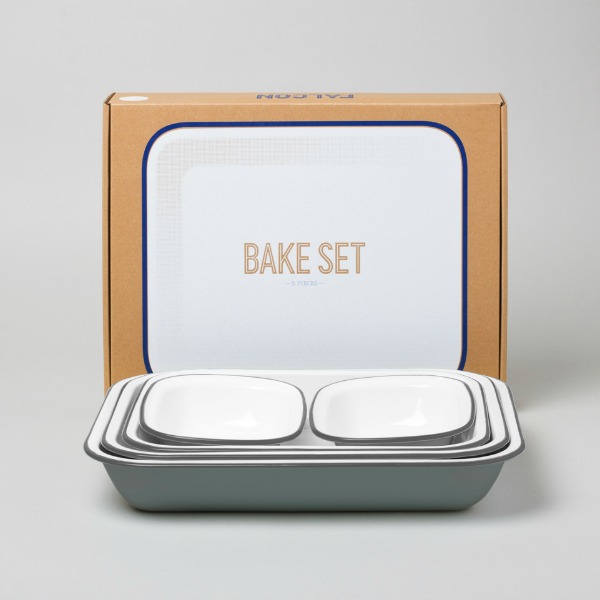
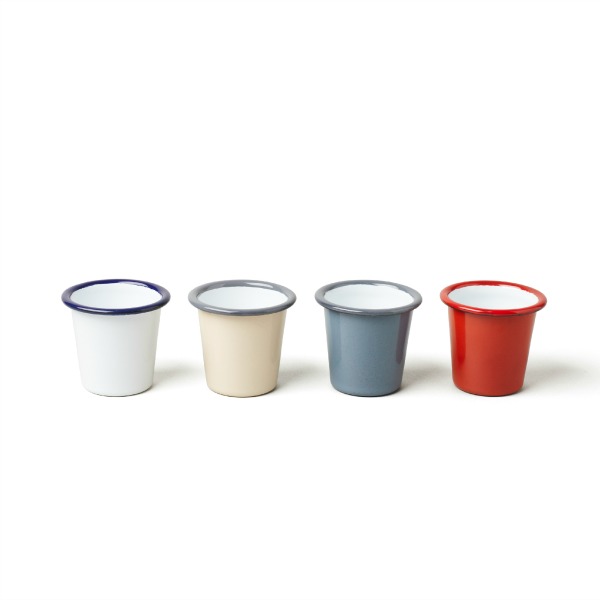
We love Falcon Enamelware. Utilitarian, affordable, chic: it functions perfectly, and has been a design classic since it first appeared in British kitchens in the 1920s. You can cook in it (it withstands heat up to 270 degrees C), prep with it, serve from it; it’s easy to clean, goes in the dishwasher, stacks brilliantly, doesn’t break, won’t burn or stain, will last forever, photographs really well (food bloggers take note – Jamie Oliver is always using it), and looks great. We’ve long since loved it in its classic form: bright white with a distinctive blue rim, but are thrilled to see that Falcon have started creating new sets using different colours. We’re particularly mad about the bake and prep sets rimmed in pigeon grey, and to that end are giving away a pigeon bake set (worth £64.99) to one lucky winner. Falcon have also extended their range to include tumblers, mugs, a serving tray and a teapot, and have collaborated with the always brilliant French store Merci to produce a set of mini tumblers (photographed below), which we use all the time. They are great for mint tea, or for filling up with something like horseradish sauce, or olives, or for making jelly or tiny chocolate pots. Great, obviously, just to drink out off too, or for a picnic. Visit Falcon’s lovely website. It makes you want to start cooking immédiatement.
Quite possibly our favourite short-haul destination, this small and utterly charming hotel nestling in the hills overlooking Camogli is a real find that you will want to return to as often as possible. Full disclosure: I loved it so much I got married here a few years ago. Run by Milanese duo Mario and Fulvio, this Genoese palazzo still has its pretty blush pink render and traditional Ligurian trompe l’oeil but inside it’s as fresh and modern as the super yachts that zig zag along the sparkling coast below. The smallest room, Terrazzo, is the best with stunning views – although to be honest, they are all good.
This is a serious blow-the-budget, Rod Stewart by the pool, A-lister hotel but it’s still one of our favourite places in the world. The views are unbeatable, the gardens are heavenly (book to have a massage on an outdoor bed here) and the bar is fabulously old world. Although you will have to drag yourself away from drinks on your own balcony, which is scented with the delicious smell of the ancient wisteria that winds along the front of the hotel.
Café: Gelateria Cavassa, via Lungomare Bettolo, 31 16036 Recco (www.cavassa.it)
Quite frankly any half decent gelateria has us in sugar-induced jitters as soon as we land anywhere in Italy but this one with its wonderfully trad wooden bar and classic line-up is one of our favorites; the rich, vanilla-y crema is a house speciality but the nocciola and cioccolato fondente are also sublime.
Once you have got over the miracle that you actually found this place (the first path begins just opposite the train station at Sori) you will marvel at just how well the Italians do “beach” – although this is more a series of craggy platforms, each laid out with loungers and a rope balustrade. It’s irresistibly chic – in that pared-back, been-there-forever look that the Italians excel at. The food is delicious (come for lunch or dinner) although an aperitivo as the sun sets is pretty unbeatable.
Restaurants: Nonna Nina, San Rocco di Camogli (www.nonnanina.it)
The food at this small hillside restaurant is about as local as it gets (even the menu is written in local Genoese dialect); almost everything from the breads and focaccias to the pasta is homemade and there are lots of local specialities including fugassette (delicious fried focaccia stuffed with cheese) and trofiette (hand-rolled pasta with pesto) and understandably there is a real emphasis on local fish. If you are coming for dinner try and follow the path around the mountain towards Portofino where there is a sweet little bar set in the rocks along the pathway.
Restaurants: Trattoria Do Spadin, Via San Nicolò Capodimonte, 55 Punta Chiappa, 16032 Camogli (+39 0185 770624)
Perhaps the most wonderful thing about this waterfront gem is that you can only get here by boat (or a long walk along the hillside footpaths if you are fit and up for the trek). Either way you will be rewarded with abundant and delicious seafood – platters of fabulous fried local fish, exquisite pastas and so forth. If you come during the day you can easily spend an hour exploring the area around the restaurant. Be warned: opening times can vary according to the weather so do check in advance.
Restaurants: O Magazin, 34 Calata Marconi, Portofino (+39 0185 269178)
Our Italian friends are a bit sniffy about this restaurant that sits at the far end of Portofino’s harbour preferring the village’s more traditional old-timers like Da Puny. But this is by far our favourite destination for dinner in Portofino and here’s why: no matter how many times we try to recreate the spaghetti vongole or baked sea bass with lemons, olives and potatoes or the divine warm octopus salad, it’s never quite as good as it is here – even when we have trekked to Selfridges fish counter for the correct type of clams/bass/octopus. Save some room for the fabulous fruity ice-creams sold at the adjoining gelateria. If we had to eat a last supper anywhere in the world, it would probably be here.
Day Trip: San Fruttuoso (Boats depart from Camogli harbour to Punta Chiappa and Santa Margherita Ligure every hour in the summer months but more sporadically out of season.)
If you make the trip to Liguria then try to get out on the water whether you hire a boat or hop on and off any of the ferries that routinely go up and down the coast stopping off at Portofino, Santa Margherita Ligure if only to see the spectacular ancient abbey at San Fruttuoso.
The arrival of Brooklyn based interiors emporium West Elm inspired us to seek out some more great homes destinations online – many of our recent discoveries including the brilliant San Francisco based March (seriously go and drool at their gorgeous homewares) don’t ship to the UK but one of our favourite New York labels, Coral & Tusk, does. We first discovered Stephanie Housley’s charming embroidered textiles, cushions and clothes at John Derian’s Manhattan store but the Brooklyn-based firm has a far wider selection on their own site including embroidered cushions, curtains, napkins and stationery. Housley is a textile artist in the truest sense of the phrase and her designs – which are all first drawn by hand before being embroidered onto cotton or linen – are inspired by travel, nature and a good dose of humour. They are the kind of finds that will become part of the fabric of your home for life. Perhaps the most shippable are the embroidered pictures which you can buy framed or unframed – any of these charming embroideries would work brilliantly in a child’s bedroom – there is also a fabulous embroidered alphabet too.
A big new recipe book is always welcome at the start of a new year – what with our collective resolutions to eat better, make more effort, get out of our cooking ruts, etc etc. This one, Allegra McEvedy’s Big Table Busy Kitchen, fits the bill perfectly, because it’s wide ranging and perfect for every day cooking and eating, rather than about anything too rarefied or one-off. It’s the ultimate family cookbook and was written when the home-made recipe book compiled by McEvedy’s mother was lost forever. That book had been Allegra’s most precious possession, not only because it was enormously useful and well put together, but because it had a hugely important symbolic value too. McEvedy’s mother died when Allegra was 17, and so the book, with its tatty orange cover, and bulging with favourite recipes clipped and annotated from newspapers and magazines, was a trigger for many happy family memories, and especially of mother and daughter cooking together. McEvedy now has her own small daughter and this book is the chef’s culinary legacy for her. The good news is that we all get to share it. After all, McEvedy reasoned: if this recipe book was published, it couldn’t ever be lost or destroyed. And so the book is a mixture of family favourites, her own greatest hits, her best ever finds, brilliant ways to transform leftovers (it’s particularly good on this), insider tips, advice, and good honest basics made extra tasty by someone who is a trained and experienced cook as well as a busy mother. The recipes in it are great, and cover everything from the basics (shepherd’s pie, lasagna, crumble etc), to more refined dishes such as sea bass baked in herbs and salt, beef Wellington, Vietnamese pork belly with pickled veg, and pear Tarte Tatin. But it’s all the other stuff in it – the advice (how to make sure a green soup is always vibrant, how to tell if you steak is done to your exact liking), the appendices (detailing how to cook every kind of basic thing, such as omelettes, braised cabbage, home made chips etc), and the writing in general (McEvedy’s voice manages to be both intensely personal and calmly authoritative at the same time) that make this book an essential addition to any kitchen, especially one with its own big, busy table.
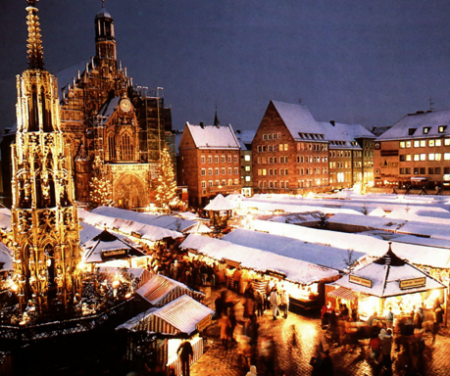
Last year we went to a number of London Christmas markets and to be frank, we were more than a little disappointed by some of them. Where was the mulled wine? Traditional Christmas tree decorations? And unique, artisan gifts to buy? So this year, we thought we’d try further afield – here are our favourite European Christmas markets.
Stockholm There are two lovely markets in Stockholm at this time of year – one in Gamla Stan, the Old Town, (open daily until December 23, 11am-6pm) where you can find delicacies like smoked sausages, reindeer jerky and sweets or handcrafted presents like traditional holiday decorations, great sheepskin booties for kids and knitwear. The second is at Skansen, the outdoor cultural museum that has had a Christmas market since 1903. There are plenty of homemade mustards, jams, sausages, marzipan, breads and cakes as well as traditional handicrafts (leather, embroidery, holiday decorations and more) and it is very family-friendly with dances around the Christmas tree and lots of activities for kids. (Open every weekend before Christmas, 10am-4pm). Zurich This market is held indoors at the main train station so is perfect if you’re stopping over or on your way skiing further afield. Keep a look out for the olive wood stall which sells great wooden boards for cheeses and meats. You’ll also find a range of traditional Swiss/German foods, wooden holiday decorations and jewellery. (Open daily until 24 December, 11am-10pm). Berlin There are quite a few markets in and around Berlin (apparently 54 in all!) but our favourite is definitely the Gendarmenmarkt Christmas Market set in a beautiful old, central square. There’s an enormous amount of food to try here – you could spend a morning alone browsing the food stalls – but what also makes it special is the wood carvers hard at work on the Christmas decorations, flax embroiderers and other entertainment such as choirs, jugglers and dance groups, not to mention the many arts and crafts stalls. (Open daily until 31 December, 11am-10pm. Free entrance Mon-Fri 11am-2pm). Munich Again there are many Christmas markets in Munich but probably the oldest, dating from 1642 is held at Marienplatz. Here you’ll find an emphasis on traditional Bavarian gifts, including wood carvings from Oberammergau, gingerbread (Lebkuchen) from Nuremberg and glassware from the Bavarian Forest. It’s also a great place to pick up everything you’ll need for a traditional crib plus there are Christmas concerts and lots of seasonal food to get you in the yuletide mood. (Open daily until 24 December, Mon-Sat, 10am-9pm, Sun, 10am-8pm). Vienna Located on the large town square between Rathaus (city hall) and Burgtheater, the Wiener Christkindlmarkt is by far the largest and probably best known christmas market in Vienna and sells a huge variety of food and Christmas gifts. (Open daily until 24 December, 10am-9.30/10pm). It does get somewhat crowded though, so we also recommend the Weihnachtsmarkt am Spittelberg which focuses particularly on traditional craftwork. It’s a smaller market and the stalls are spread throughout the narrow streets but you’ll find plenty of cafes and small bars selling gluhwein to keep you going! (Open daily until 23 December, 2pm-9.30pm).
It’s goodbye for now…
The team at A Little Bird are taking a break to recharge and make some exciting changes behind-the-scenes. We look forward to seeing you again soon.