Recipe: very lemony crunch cake

My father turned 80 last weekend and so we baked him a sticky lemon cake, and covered it with flowers from the garden, crystalized in sugar. He loved it. Here is the recipe, which comes from Fiona Cairns’s book Bake & Decorate.

Very lemony crunch cake. Serves 6 (In fact, it gave us 12 not too mean slices).

For the Cake
175g unsalted butter, softened, plus more for the tin
175g self-raising flour
a pinch of salt
2 eggs lightly beaten
175g golden caster sugar
zest, finely grated, and juice of 1 large unwaxed lemon

For the Topping
juice of 1 large lemon
100g white granulated sugar

Preheat the oven to 180 C/ fan 170 C/ 350 F/ gas mark 4.

Lightly butter an 18cm diameter, 7.5cm deep, round springform tin (I used a 20cm diameter. It was fine) and line the base and sides with baking parchment.

Sift the flour and salt into a bowl and set aside. Melt the butter in a small pan and set aside to cool slightly. Using the whisk attachement of an electric mixer, or a bowl and electric mix, beat the eggs and sugar together until very light and fluffy (this may take 5 minutes). Blend in the melted butter; then very gently fold in the flour and zest. Finally, slowly fold in the juice.

Pour the batter into the tin and bake for 30-35 minutes or until the cake springs back to the touch, or a skewer inserted into the centre comes out clean.

Meanwhile, make the crunchy topping by simply mixing the juice and sugar together in a small bowl. Immediately the cake comes from the oven, prick tiny holes all over it with a fine skewer or cocktail stick. Pour the lemon syrup evenly all over the surface. Leave to cool completely in the tin.

I iced the cake by sieving 150g icing sugar into a bowl and mixing it with between 1 and 2 tablespoons of water. You want it quite thick if you are going to add extra decorations and want it to look opaque, so be mean with the water. Smear the paste on the cake and let it dribble down the sides.

For the flower decorations: first pick your flowers. Edible ones like roses or geranium leaves are best, but finally it’s about the look not the taste of the flowers. Make sure the flowers are completely dry. Cover a tray or baking tray with greaseproof paper. Break up an egg white with a fork. It doesn’t need to be whisked, but you don’t want it too gloopy and thick. Using a child’s paint brush, paint every little individual bit of the flower, getting in and out of every petal and stamen. If you are slap dash it will show. Then, with equal delicacy, sprinkle caster sugar over the flower, making sure you get into every nook and cranny. Place each flower on the tray and when you have finished let them dry overnight in a warm place – an airing cupboard is ideal.

Gardening: plant white foxgloves now for spring glory

Why must you plant white foxgloves? Well the obvious answer is that they are show-stoppingly beautiful. They work so well in any garden because being white they are understated and chic, plus they add height and structure to borders (which always need height and structure). We plant as many as we can in among our roses. Pink foxgloves, which you see all over the place, are lovely of course. But they take over. Literally. If you have white and pink foxgloves in your garden one year, it won’t be long before you only have the dominant pinks (the solution is to keep pulling out the pinks). So white foxgloves are a most deliberate choice without ever being a noisy statement. They are happy in sun and shade, dry or wet soil, and they’ll self seed. They are just heaven on every level. They are also biannuals, which mean they need to be planted one year to flower the next. If you sow seeds in the spring you’ll see green leaves in July and August but no flowers for a year. The short cut? Sow the small, green plants now and you’ll have flowers by late spring and through the summer. Right now Woottens Nursery—who have an excellent online, telephone and delivery service—is offering 16 Digitalis purpurea Alba (white foxgloves to you and me) for £19.90, which is almost half their normal price.

Guest blog: Stephen Jones’ Inspirations

Stephen Jones is one of London’s great talents. He has been a milliner at the centre of the fashion world for 30 years, and is famously loved. He has created hats ranging from spectacular head-dresses for Kylie Minogue to the chicest pill-box for Carla Bruni. As a milliner he has collaborated with many fashion designers, including Vivienne Westwood, Thierry Mugler, and Jean Paul Gaultier. He currently works with John Galliano, Marc Jacobs, Comme des Garcons and Giles Deacon. One of his hats, a gold Nefertiti crown, made for Dior’s haute couture fashion show in 2004, appeared on the front page of 110 newspapers.

In 2009 Jones curated an exhibition ‘Hats: An Anthology‘, at the V & A (brill catalogue by the way), and in 2010 MoMu, the Fashion Museum in Antwerp, gave him a big retrospective, showing work over the 30 years. Highlights included giant hats, a special contribution from Anna Piaggi, and a documentary by Gitte Meldgaard. If you didn’t make it to Antwerp you could console yourself by buying the wonderful catalogue instead.

Jones is known for his creative invention, but nothing comes out of nowhere, and Jones is one of those people who always knows about unusual books, good music and less well-known artists. We asked him what he’s been looking at and reading lately. He came back with the inspirations behind his latest collection. Sometimes, all you have to do is ask….


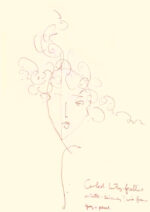
At the moment we are sampling my Spring Summer 2011 collection, which I have been sketching over the summer. It’s almost like a painting. with a background, middle ground and foreground.


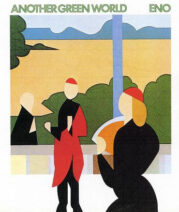
The Background: Brian Eno; Ambient hats; a wash of shade

The hats in the background are inspired by Brian Eno’s groundbreaking record Another Green World of 1975 where he started to play with the concept of ambient music. This I rediscovered when I was having a few days holiday in Lord How Island, a tiny speck in the South Pacific . Thank God for ITunes!


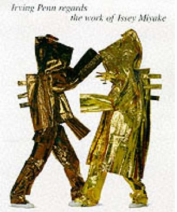
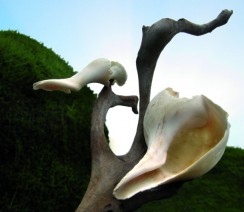
The Midground: Issey Miyake; driftwood; flowers


The midground is inspired by the oeuvre of Issey Miyake in his book Irving Penn Regards Issey Miyake, whose amazing dresses are timeless and span the oft discussed gap between fashion and art.


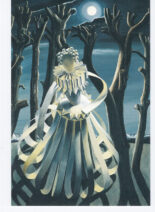
The Foreground: Marion Adnams; surreal; scrolls

The foreground is inspired by the work of Marion Adnams, a little known British Surrealist working during the forties and fifties, who I first discovered at Manchester City Art Galleries exhibition, Angels of Anarchy. Her essentially English paintings have a bizarre and charming femininity. One of her paintings, The Distraught Infanta, featured of the cover of a wonderful book of poems, Singing in the Dark, by Alison Brackenbury.


All this in a hat!!!!

Shopping: Broadway Market

More underground than Borough, and less of a tourist destination so it’s easier to get round, Broadway Market, adjacent to London Fields, has been established in Hackney since 1890. Its more recent appeal for aspirant east enders is due to its community mix of farmer’s market food stalls, vintage clothing, hairdressers, furniture shops and cafés, including Cooke’s jellied eels restaurant that has been a fixture since 1900.

Cafés: Fernandez & Wells

Places like Fernandez & Wells are thin on the ground in Soho, but given that it’s hard to find a seat here, one wonders why. The combination of farmer’s market-style simplicity – just a few items on the menu but each well executed – and uncluttered space (without the customers) means that it’s a pleasure to eat here. On the menu? Prosciutto and rucola with homemade mayonnaise on Poilane bread, with affogato – ice cream melting in espresso – for afters. Customers are encouraged to bring their purchases from the food shop around the corner to sit in and eat.

Restaurants: breakfast at Cecconi’s

Part of the Soho House group and as the breakfast venue of choice for Mayfair-based media types (Condé Nast’s offices are minutes away) Cecconi’s service is slick with décor to match. Designer Ilse Crawford’s contemporary take on a classic Italian restaurant features emerald green leather upholstery, dark wood paneling, black and white marble floors and Venetian glass mirrors. The menu caters to all types, from foodie to faddy, with winter truffle scrambled eggs, to dull, but virtuous, wheat free toast and soya spread.

Bars: The Fumoir at Claridge’s

The best thing about Claridge’s Fumoir is its size; accommodating just 12 at cosy tables and a horseshoe bar makes it perfect for intimate occasions. Despite its name, the no-smoking Fumoir captures the hotel’s Art Deco splendour in sumptuous style with aubergine velvet upholstery, etched glass panels, vintage fashion photographs and cocktails served in Lalique glasses. Done with admiring the décor? Then turn your attention to the celebrities at the next table; after Melrose Avenue it’s Hollywood’s favourite hangout.

Bars: Connaught Bar in Mayfair

Interior designer David Collins is famous for creating London’s most desirable watering holes and the Connaught Bar is no exception. With its dusty pink, silver leaf and dark leather interior, it’s no wonder this is Mayfair’s most popular venue for drinks. What makes it special is a level of comfort that is lacking elsewhere: the couches are deep and inviting and the service is always slick.

Recipe: Fig Jam

If you are lucky enough to have a fig tree in your garden, you’ll be eating them straight from the branches one by one or for lunch with a slice of prosciutto, or torn up on bruschetta with a few rocket leaves. But better yet: get your hands on a glut. If you are anywhere Meditarranean make sure you bring back a bag in your hand luggage (we got ours in Tangier), or buy them at your local market or fruitier. They are at their cheapest at this time of year. Then make fig jam. You don’t need to peel the figs or faff around testing that the jam has set properly, because figs are ready-made to be happily boiled up with some sugar, and turned into delectable jam.

Here is the best recipe for Fig jam, by the one and only Jane Grigson.

Mme Verdier’s Black Fig Jam

A recipe from the red village of Collonges, in the Corrèze near Brive, sent to me by a friend.
Prepare the figs by removing the stems and any skin which comes off easily. Weigh them and leave them overnight in a bowl with half their weight in sugar.
Next day, put the whole thing into a preserving pan and bring to the boil. As soon as it boils, remove the fruit with a skimmer or perforated spoon. Leave the syrup in the pan to go on boiling to the pearl stage 106ËšC (222ËšF), when the sugar from small pearl-like balls. Put back the figs and cook gently, while stirring, for about 15 minutes. Be careful that the fruit does not catch and burn. Pot in the usual way.

Two notes: you can use any saucepan instead of a preserving pan as long as it is big enough. You don’t want boiling sugar to be spluttering over the sides of a small pan.

To pot the jam ‘in the usual way,’ means simply that you must use sterilised jam jars. To do this, either put them through a hot cycle in the dishwasher or boil them in a saucepan of water for five minutes. If you use screw top lids you don’t need to bother with those little circles of wax paper.

Gardening: buy great spring flowering bulbs online

There is nothing like the arrival of Spring flowers planted from bulbs in the Autumn. Stocks of the best bulbs sell out, so even if you don’t plant your tulips till November (plant all other bulbs much earlier, preferably in September and October), make sure you get your orders in now. We get our bulbs online from Crocus and Sarah Raven. Both have a wonderful selection—much better than most garden centres—and come with clear instructions on planting. Sarah Raven is particularly good for forced bulbs for indoor flowers: think of bowls of sweet smelling paper whites in time for Christmas. One tip: Use restraint when it comes to varieties unless you have a lot of space. For example, we’ve ordered just two types of tulips—in white for half our pots and the gorgeous, darkest purple for the rest.

Mark Hix’s favourite Paris restaurants


Allard, 41 rue St-André-des-Arts, 6th Arrondissement.

A buzzy brasserie with all the things I like: poulet de bresse for two, a pot of veal sweetbreads, and simple things like a plate of sauteed girolles to start. It’s always full to the brim—to the point where you may as well be having dinner with those at the next door table.


Chez George, 1 Rue du Mail, 2nd Arrondissment.
One of the great city’s great remaining bistro’s. It’s long, thin, 1920s style room has tables set close together, making it a very convivial dining space – our neighbours insisted on feeding us whilst we waited for our starters to arrive. The food is typical of an old fashioned french bistro: when we were there, crispy endive tossed with crisp chunks of bacon and a soft poached egg was delicious, a large bowl of french bean and ox cheek salad was passed from table to table, and the star of the show was the the onglet de beouf—a skirt steak that needed little more than seasoning, with sweet and perfectly cooked shallots. If you are looking for a slice of old-fashioned Paris, this is it.


L’ami Louis, 32 rue du Vertbois, 3rd Arondissment.
I have fond memories of this place, not just because its does the most amazing (and the most expensive) roast chicken I have ever eaten, but because I owe a lot to it. The simplicity and presentation of the food, as well as the down-to-earthiness of this restaurant, were great inspirations for me when I began thinking about starting out on my own—the roast chicken and chips we now serve at Hix Oyster & Chop House and HIX didn’t come from nowhere.

It’s goodbye for now…

The team at A Little Bird are taking a break to recharge and make some exciting changes behind-the-scenes. We look forward to seeing you again soon.

CONTINUE TO SITE

A Little Bird Told Me…

SIGN UP TO OUR NEWSLETTER TO STAY IN-THE-NOW. ONLY LANDING IN YOUR INBOX ON THURSDAY MORNINGS AT 11AM.